Flexweld®
Resistance element welding
The market’s demands
The market’s demands
- Multi-material mix
- Car bodies with a higher proportion of aluminum components (e.g., Al die-cast)
- Use of existing welding technology for a variety of joining tasks
- Corrosion-resistance
- No extra worker qualifications
- Cost-efficient manufacturing processes
- Saving weight
- Flexibility in materials
- Suitability for high-volume production
- Wide variety of metal thicknesses
- Reducing cost of each joining point
- Using existing quality characteristics

Technical advantages of Flexweld®
- Joins maximum strength steels
- Hybrid materials combinations
- Uses elements with a variety of surfaces
- High level of flexibility regarding material and sheet thickness
- Can be integrated into existing welding and assembly lines
- Requires only a small amount of further qualification for factory personnel
- Very good fastening performance
- Narrow flanges can be implemented
Commercial advantages of Flexweld®
- Saves on investment costs because it uses existing production technology
- Generates considerable weight saving
- Less additional training and worker qualification
- Lower cost for the customer by obtaining element and system from a single source „One Face to the Customer“
Flexweld®
Resistance element welding

of a car‘s total weight
is in the body
The considerable reduction in weight is one of the great strengths of the Flexweld® joining system. So it is a key element in moving car production towards more lightweight construction.

Flexweld®
The joining process in detail
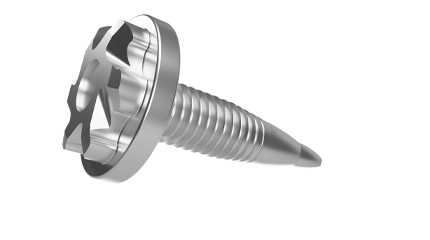
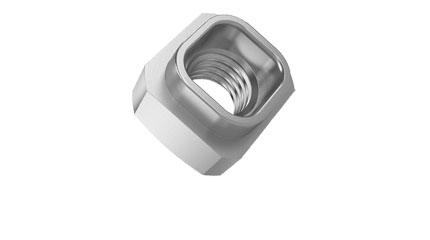
Flexweld® elements are selfpunched and embedded into the aluminium sheet. This sheet is then welded to steel components, using conventional resistance spot welding guns, and then bonded with adhesive.


Headline Downloads Neu
Everything you need.
Headline Produkte unten